
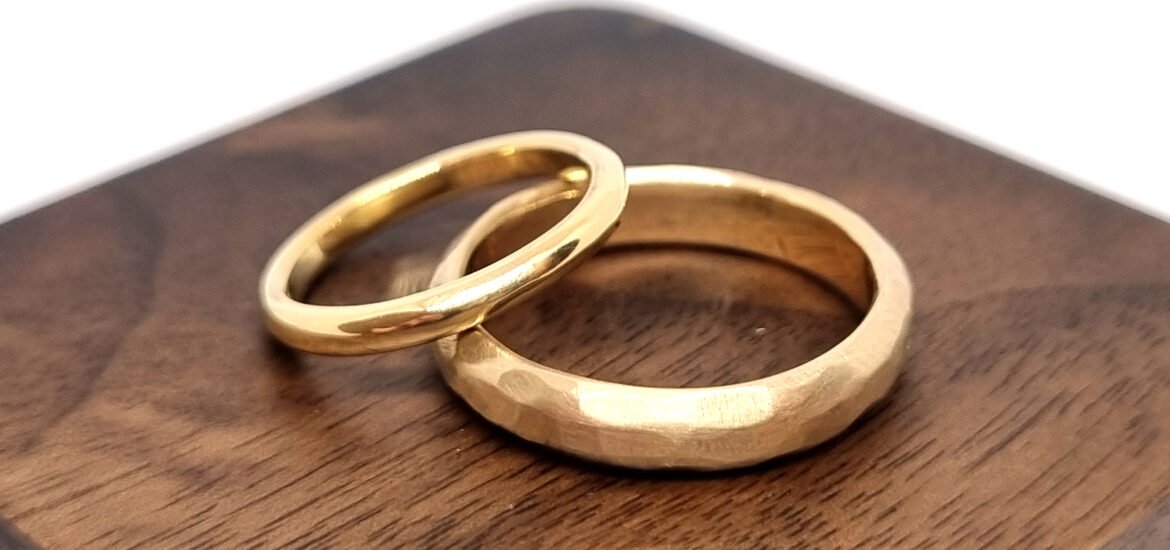
1. Choose the Ring Shape (Profile)
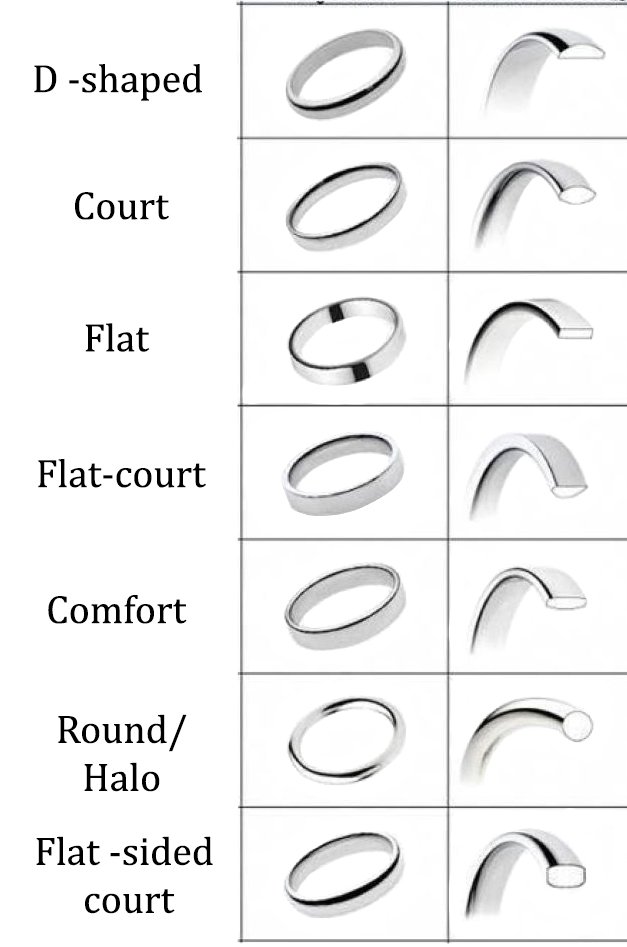
The shape, or profile, is how the band looks in cross-section.
- D-Shaped: Flat on the inside, curved on the outside — traditional and elegant.
Court : Rounded inside and outside — timeless, comfortable, ideal for daily wear.
- Flat: Flat inside and out — sleek and contemporary, suits modern styles.
Flat Court: Flat on the outside, rounded inside — modern look with comfort.
Comfort: Rounded inside and outside — slightly less rounded than court.
Round/Halo: Fully round profile.
Flat-sided court: Slightly angled edges that catch light — stylish, slightly more detailed look.
Tip: Try different profiles in person — comfort varies depending on hand shape and finger size.
2. Pick the Width
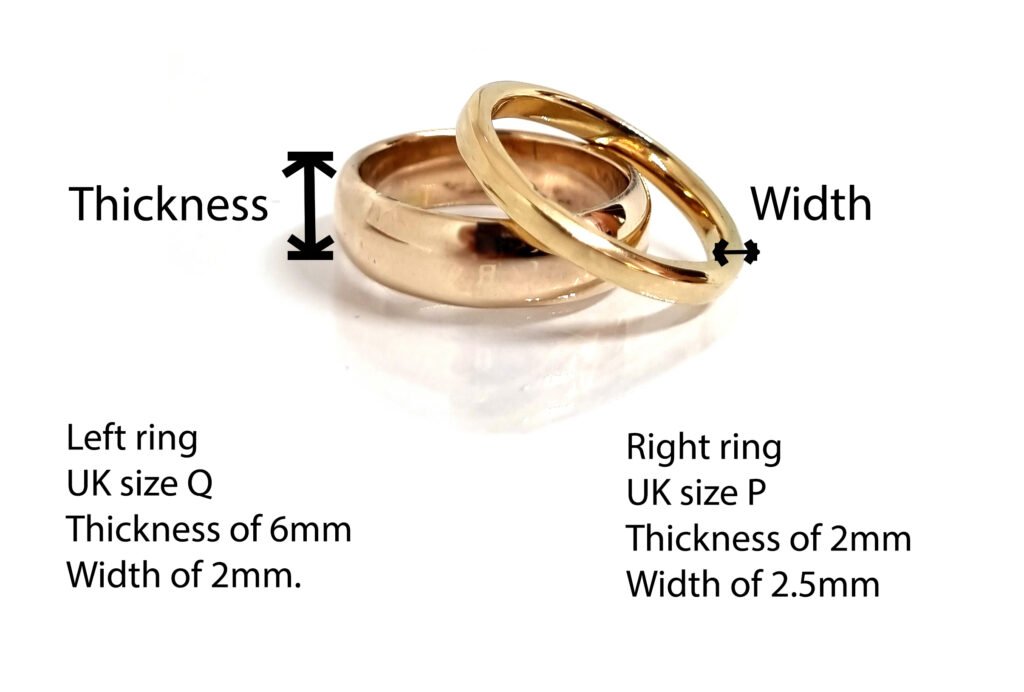
The width is how wide the ring looks on your finger (measured in millimeters).
2–3 mm: Slim and delicate, suits smaller hands or minimalist styles.
4–6 mm: The most popular range — balanced look, comfortable for most people.
7+ mm: Bold and statement-making — better for larger hands or those who like a heavier feel.
Tip: Match your width to your engagement ring (for women) or finger proportion (for men).
3. Decide on the Thickness
The thickness (depth of metal from inner to outer surface) affects durability and comfort.
Standard (1.6–2 mm): Comfortable, classic, durable for daily wear.
Lightweight (less than 1.6 mm): Slimmer, less bulky — but can wear faster over time.
Heavyweight (more than 2 mm): Substantial feel, lasts longest, good for engravings or high polish.
Tip: A thicker ring feels sturdier, but too much thickness can feel tight — try before you buy.
Final Advice
Test comfort — wear the sample ring for a few minutes.
Think lifestyle: Choose smoother profiles if you use your hands often.
Along with your ring sizes, we can give you quotes for various metals once we have a better idea of the style you would like.